NASAL BREATHING
SLEEP
SNORING
NASAL BREATHING
SLEEP
SNORING
Best Nasal Strips for Snoring: Ranked for 2026
Key Takeaways
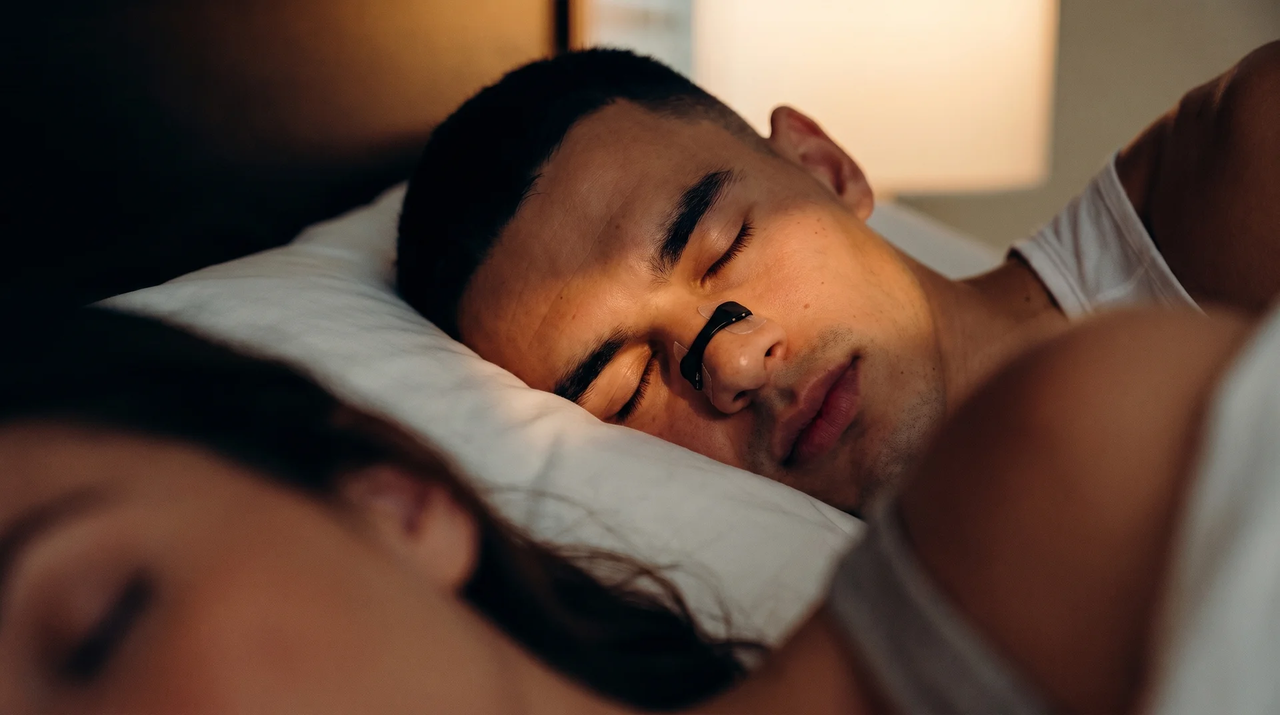
Nasal strips reduce snoring, but only when the snoring originates at the nasal valve. They won't help snoring caused by throat or palatal tissue vibration, and they are not a treatment for obstructive sleep apnoea
A quick self-test tells you whether a strip is likely to help: if pressing your nostrils gently outward makes breathing significantly easier, your snoring is likely nasal-origin and a strip will work
A systematic review and meta-analysis of 112 studies (Camacho et al.) found no significant change in apnea-hypopnea index in OSA patients using nasal dilators.
A clinical trial of 30 habitual snorers found external nasal dilator strips significantly reduced maximum snoring intensity, particularly during lighter sleep stages, with most users experiencing improved sleep quality
AirMag Pro ranks #1 overall because the medical-grade dual-tab adhesive holds all night without skin abrasion on daily removal, making it the right choice for athletes and performance-focused sleepers who want to stack nasal breathing benefit across training and sleep
Breathe Right Extra Strength is the best budget option and the most clinically studied snoring strip on the market, reliable overnight, and widely available
Breathe Right Extra Strength is the best budget option and the most clinically studied snoring strip on the market, reliable overnight, and widely available
Do Nasal Strips Actually Help With Snoring?
Yes, with a critical qualification that most articles skip entirely. Nasal strips help with snoring that originates at the nasal valve. They don't help with snoring that comes from the throat, the soft palate, or from obstructive sleep apnoea. This distinction is the most important thing to understand before buying any nasal strip for snoring and it's the one thing the Sleep Foundation, SleepApnea.org, and the peer-reviewed literature consistently agree on.
The Evidence: What Research Actually Shows
A clinical trial of 30 habitual snorers found that external nasal dilator strips significantly reduced maximum snoring intensity, particularly during lighter sleep stages, with most participants experiencing improved sleep quality. Christopher Heywood, Director of Research at Longevity, confirms the mechanism: strips physically open the nostrils, reducing the vibrations that cause snoring when nasal airflow is the primary restriction. A systematic review and meta-analysis of 112 studies found no significant change in apnea-hypopnea index in OSA patients, confirming strips are effective for nasal-origin snoring specifically, not for OSA or throat-based causes.
The bottom line on the science: nasal strips are a legitimate, non-invasive, drug-free tool for nasal-origin snoring. They are not a cure-all, they are not a treatment for sleep apnoea, and they will have zero effect on snoring that originates downstream of the nasal valve. Knowing which category you fall into before buying saves both money and the frustration of writing strips off after using the wrong tool for the wrong problem.
Important: When to See a Doctor
If your snoring is accompanied by gasping, choking, observed breathing pauses during sleep, excessive daytime fatigue, or morning headaches, these may indicate obstructive sleep apnoea, which requires medical assessment. Nasal strips are not appropriate as a substitute for OSA diagnosis or treatment. See a GP or sleep specialist if any of these symptoms apply.
Which Type of Snorer Do Nasal Strips Help?
Snoring has multiple possible origins and the strip only addresses one of them. Here's a straightforward breakdown of where nasal strips are and aren't the right tool.
Nasal strips will help
Nasal valve restriction:
Narrow nasal passages or collapsed nasal valve causing airflow restriction at the nose. The self-test below will confirm this.
Congestion-related snoring:
Snoring that worsens during colds, allergy season, or dry conditions where nasal swelling reduces airflow and causes vibration.
Positional nasal snoring:
Snoring that worsens when sleeping on your back and improves when nasal passages are more open.
Athletes with nasal breathing restriction:
Snoring that correlates with heavy training blocks, dehydration, or exercise-induced nasal congestion.
Nasal strips won't help
Palatal snoring: Vibration of the soft palate at the back of the mouth, the most common type. Strips don't reach this area.
Pharyngeal snoring: Caused by throat tissue vibration, often associated with relaxed throat muscles during sleep. Strips have no mechanical effect here.
Obstructive sleep apnoea:
Strips are not an OSA treatment. A systematic review of 112 studies confirmed no meaningful improvement in apnea-hypopnea index with nasal dilators in OSA patients.
Tongue-based snoring:
Where the tongue falls back and partially blocks the airway. A different intervention entirely.
The Nasal Strip Self-Test
Before buying any nasal strip for snoring, do this: using your fingertips, gently press the sides of your nostrils outward and slightly upward, mimicking the effect a strip would create. Breathe in through your nose. If breathing feels significantly easier with your fingers in this position, your snoring is likely nasal-origin and a strip will help. If there's no difference, the restriction is further back in the airway and a nasal strip won't address it. This test is referenced by sleep specialists and ENTs as a basic first-line indicator before recommending external nasal dilators.
Best Nasal Strips for Snoring: Ranked
Ranked on the four variables that matter for overnight snoring use: adhesive hold through a full night's sleep, nasal valve lift strength, skin safety for nightly removal, and comfort for extended wear.
1
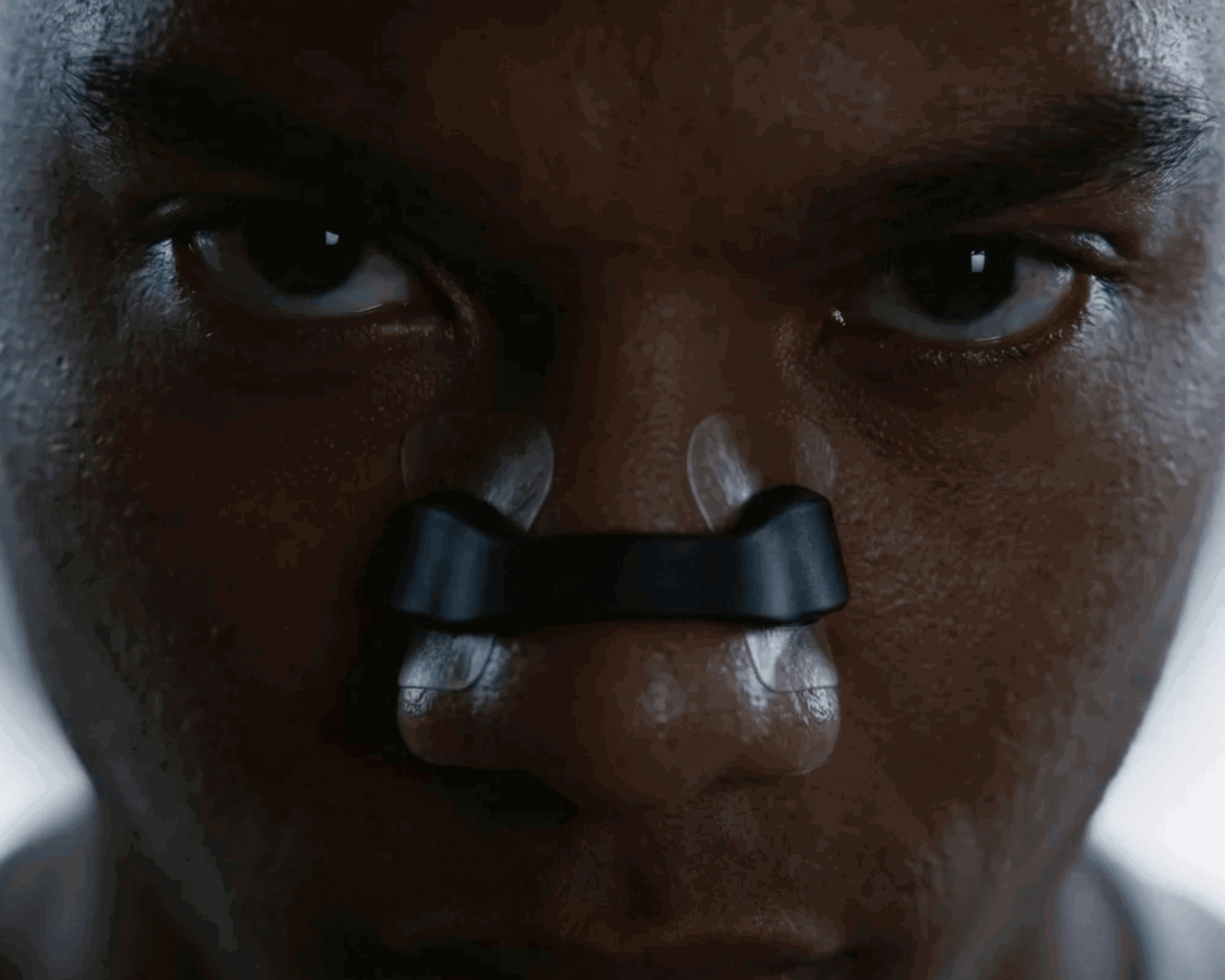
AirMag Pro Magnetic Nasal Strips
Best Overall
Best For Athletes Who Snore
Best For Daily Night Use
Adhesive: Medical-grade dual-tab
Overnight hold: Full night + beyond (72hr tested)
Most nasal strips were built for a single use case, sleeping still in a dry bedroom. AirMag Pro was built for athletes who need it to survive hard training, which means it more than handles the comparatively forgiving conditions of overnight sleep. The medical-grade dual-tab adhesive holds reliably through a full night and removes cleanly the next morning without skin abrasion, a crucial distinction for nightly users who apply and remove a strip 365 days a year.
The dual-tab magnetic system anchors at the nasal valve with two small adhesive tabs and a reusable magnetic band. Because the tabs are small and precisely placed, skin contact surface area is minimal, which is exactly why daily removal stays gentle even with medical-grade adhesive. The reusable band also makes AirMag Pro the most cost-effective option at nightly frequency, the ongoing cost is only replacement tabs.
For athletes who snore: this is the strip that stacks training and recovery benefit in a single product. Wear it during morning training, keep it through the day, sleep in it overnight. The 24-hour breathing optimization cycle during exercise, and maintained nasal airflow during sleep is what separates AirMag Pro from every other option on this list for performance-focused users.
Note: AirMag Pro does not currently ship to the USA, US-based customers should see Intake Breathing below.
VERDICT
The premium choice for snoring. Wins on adhesive quality, skin safety for nightly use, and the unique ability to cover both training and sleep in one product. The right upgrade from Breathe Right for serious daily users and athletes.
2
Breathe Right Extra Strength: Best Budget Option
Best Budget Athletic Strip
Best For First Time Users
Adhesive: Consumer PSA (3M)
Overnight hold: Reliable on dry skin
Breathe Right has been on the market since 1993 and is the most clinically studied nasal strip in the world. The Extra Strength variant uses a three-band spring design, their strongest configuration, which provides meaningful nasal valve lift for snoring and congestion relief. It's the strip used in the majority of peer-reviewed nasal dilator research, which gives it a depth of evidence no competitor can match.
For overnight snoring on dry skin, the consumer PSA adhesive performs reliably, stationary sleep conditions are what it was built for, and it delivers consistently.
The limitation shows up at daily nightly frequency: consumer-grade adhesives cause progressive skin stress over time, with redness and mild abrasion common complaints from users who apply strips every single night for months. For occasional use, this doesn't apply. For nightly use 365 days a year, the skin irritation risk accumulates.
If you've never tried nasal strips for snoring before, Breathe Right Extra Strength is the right place to start. Confirm the concept works for you at a low cost before committing to a premium system.
VERDICT
The most studied, most accessible snoring strip on the market. Right for occasional to regular use and for first-time users. For nightly use at high frequency, the skin safety of AirMag Pro's medical-grade adhesive becomes worth the upgrade.
3
HiStrips: Best for Occasional Snoring and Light Sleepers
Good For Occasional Snoring
Good For Comfort Light Sleepers
Adhesive: Sport formulated
Sweat hold: Good in dry conditions
HiStrips perform adequately for sleep and occasional snoring, the sport-formulated adhesive holds well on dry skin overnight and the strip is notably comfortable for extended wear. Multiple colour options make them less conspicuous than beige pharmacy strips, which matters to some users. The nasal valve lift is meaningful and comparable to Breathe Right.
The primary limitation for heavy snorers: HiStrips were engineered with light-to-moderate conditions in mind. For people who sweat during sleep, sleep warm, or have oilier skin, adhesive failure overnight is a more common complaint than with Breathe Right's established 3M adhesive. For light sleepers and cool sleepers who snore occasionally, HiStrips are a comfortable and well-designed option.
VERDICT
A comfortable, aesthetically considered option for occasional snoring and light sleepers. Less reliable for heavy sleepers, warm sleepers, or those with oilier skin where adhesive failure overnight is more likely.
How to Apply Nasal Strips for Overnight Hold
Sleep conditions are more forgiving than athletic conditions, no sustained sweat, no movement shear, but there are application steps that significantly improve overnight hold and morning skin comfort.
Clean and Dry the Skin Before Application
Evening skincare products, moisturizers, serums, night creams are the primary cause of overnight nasal strip failure. Apply the strip before any skincare products reach the nose area, or use a clean dry cloth to remove residue from the nose bridge before placing the strip. A thin layer of moisturizer on skin is enough to compromise adhesive contact.
Apply to the Nasal Valve, Not the Bone
The nasal valve: the soft cartilage in the lower third of the nose is where restriction happens. Strips placed too high on the nasal bone provide minimal mechanical benefit. Position the strip so it bridges the lower cartilage area, applying tension where the nasal passages are most susceptible to collapse during sleep.
Press Firmly and Hold for 30 Seconds
Full contact activation. Centre to edges, sustained pressure. This step is frequently rushed and is the primary reason strips peel during the night rather than in the morning.
Remove With Warm Water in the Morning
Wet the adhesive area with warm water and let it soften for 15–20 seconds before peeling. This is especially important for daily users — dry removal is the primary cause of skin abrasion and the reason many people stop using strips after a few weeks. Warm water removal is the most effective single habit for sustainable nightly strip use regardless of brand.
Frequently Asked Questions
Yes, for snoring that originates at the nasal valve. A clinical trial of 30 habitual snorers found external nasal dilator strips significantly reduced maximum snoring intensity, with most participants experiencing improved sleep quality. The caveat: strips only address nasal-origin snoring. They have no effect on snoring caused by palatal vibration, throat tissue, or obstructive sleep apnoea. The self-test above — pressing your nostrils gently outward is the quickest way to determine whether a strip is likely to help your specific snoring.
For snoring caused by nasal restriction, nasal valve collapse, narrow nasal passages, or nasal congestion. Any strip that holds overnight and maintains nasal valve dilation can help. AirMag Pro is the premium option with superior skin safety for nightly use. Breathe Right Extra Strength is the most affordable and clinically studied sleep option. Neither strip, nor any nasal strip can treat snoring that originates from throat or palatal tissue vibration. If that's the source, an ENT referral is the appropriate step.
Yes, for congestion where nasal valve restriction is a factor. Nasal strips widen the nasal valve, which can provide meaningful temporary relief from stuffiness caused by structural narrowing or mild mucosal swelling. They are not a substitute for treating the underlying cause of congestion (allergies, infection) and don't address congestion in the posterior nasal passages. For acute congestion during training or sleep, they're a useful drug-free tool for keeping nasal airflow open.
For snoring specifically, the primary advantage of magnetic dual-tab strips over spring-band strips is skin safety at daily nightly frequency not necessarily greater nasal valve lift. AirMag Pro's medical-grade tabs cover less skin surface area and remove more gently than a full-bridge spring-band strip, which matters when the product is applied and removed 365 nights a year. For occasional snoring use, the difference is less significant. For nightly daily users, it's the most important practical advantage.
Conclusion
Nasal strips work for snoring specifically for nasal-origin snoring. If the self-test confirms that your restriction is at the nasal valve, a strip is one of the most effective, non-invasive, drug-free tools available. The question is which strip holds all night, removes cleanly every morning, and doesn't damage your skin over months of nightly use.
For budget users and first-time snoring strip users: start with Breathe Right Extra Strength. It's the most studied option on the market and costs almost nothing per use.
For athletes, performance-focused sleepers, and anyone using a strip every single night: AirMag Pro. Medical-grade adhesive, gentle daily removal, and the only strip that stacks overnight snoring benefit with training performance in one reusable system.
Last updated September, 2026
Written By The AirMag Pro Team
Athletes & Sport Performance Specialists
The AirMag Pro Team brings together athletes, sport performance specialists, and applied researchers focused on one of the most overlooked variables in athletic output: breathing mechanics. Our work spans nasal airflow physiology, adhesive materials science, and real-world athletic testing. Every piece we publish is benchmarked against current peer-reviewed research and validated against the conditions serious athletes actually train in.